Alibaba just admitted it’s struggling to keep up with rival chipmakers and AI shops
Reveals decent new homegrown accelerator and tiny production volumes
Alibaba just admitted it’s struggling to keep up with rival chipmakers and AI shops
Jump to main content
REG AD
Systems
Alibaba just admitted it’s struggling to keep up with rival chipmakers and AI shops Reveals decent new homegrown accelerator and tiny production volumes
Simon Sharwood Simon Sharwood
APAC Editor
Published fri 22 May 2026 // 03:39 UTC
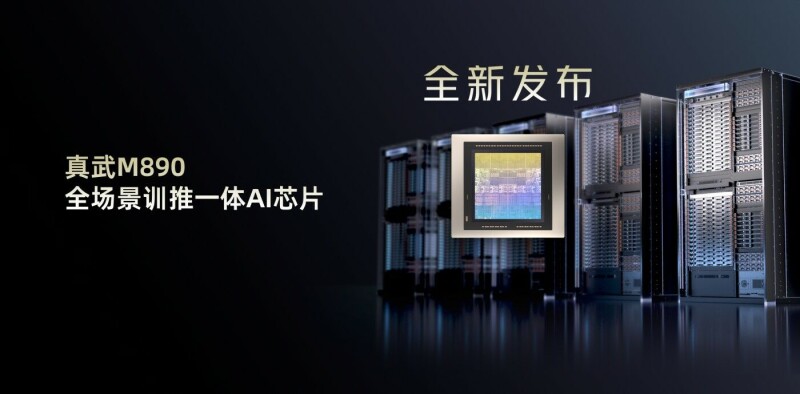
Chinese tech giant Alibaba has revealed a new accelerator and accompanying rack-scale server rig without offering much detail about their performance – and also admitted it’s only been able to make chips in trivial quantities.The new chip is called the Zhenwu M890, and comes from Alibaba’s semiconductor design business T-Head. Neither company has said much about it other than stating it includes 144GB of on-chip memory, possesses “800 GB per second of inter-chip bandwidth” and natively supports precision formats from FP32 down to FP4.The Chinese giant didn’t offer any info about performance other than to say it delivers “three times the performance of its predecessor, Zhenwu 810E.” Based on the specs of the old and new devices, we think the M890 might give Nvidia’s 2024-vintage H200 a run for its money.
REG AD
That means the most interesting figure in Alibaba’s announcement is 560,000 – the number of Zhenwu chips Alibaba says T-Head has made to date.
REG AD
MORE CONTEXT Alibaba delivers RISC-V server chip optimized to run China’s top AI models
Alibaba has made 470,000 AI chips, admits they’re inferior and may always be
Alibaba Cloud hikes prices by up to 34%, blames hardware costs and AI demand
Top cloud providers to outspend Ireland's GDP on AI in 2026
By way of contrast, Nvidia says AWS alone will rack and stack one million of its GPUs this year. AWS’s spending on AI infrastructure is at similar levels to Microsoft, Meta, and Google, so it’s conceivable that Nvidia will make and sell three or four million GPUs to satisfy those four customers alone.Alibaba’s announcement doesn’t offer any information about production volumes for the M890.The company did talk up the machines the M890 will run inside – a new beast called the Panjiu AL128 Supernode Server Alibaba described as “a rack-scale system that packs 128 AI accelerators into a single unit and delivers petabyte-per second internal bandwidth … designed specifically for the concurrency patterns that agents generate: unpredictable, high-frequency bursts of inference requests that overwhelm conventional compute clusters.”It seems Alibaba intends racks packed with M890s plus Panjiu AL128s to handle agentic workloads.T-Head has also created a new networking chip called the “ICN Switch 1.0,” which we’re told “delivers up to 25.6 Tbps of aggregate bandwidth and enables congestion-free communication across clusters of 64 accelerators.” Those are specs that Broadcom and Nvidia reached years ago.
Alibaba's T-Head M890 chip and Panjiu AL128 Supernode Servers
Alibaba’s chips therefore deliver performance that leaves its cloud well behind its western competitors, which would be a problem if its Chinese peers were buying kit from Nvidia. But despite the US lifting export restrictions on some advanced AI hardware, Beijing has not let local buyers acquire any: Nvidia recently told investors it doesn’t expect to win any revenue from China for the foreseeable future.Chinese hyperscalers haven’t announced capex spending at anywhere near the levels of their American rivals. Perhaps we now know why: T-Head can’t get a lot of gear made, probably because accelerators like the M890 require an advanced semiconductor manufacturing process that Chinese companies can’t access from offshore fabs due to US sanctions. Chinese fabs can’t yet match the prowess of TSMC, the source of most high-end GPUs.So how are China’s tech giants meeting demand? We’ve previously covered attempts to smuggle Nvidia parts into China and Bloomberg yesterday reported Taiwanese authorities have cracked down on GPU smugglers. We’ve also seen suggestions that Chinese companies send storage devices across borders to move data into facilities that have Nvidia kit waiting to run training workloads. ®
alibaba cloud alibaba server nvidia gpu china t-head systems h200
REG AD
Ucell and ZTE complete large-scale deployment of AI‑Powered green network solution in Uzbekistan
Network-wide rollout boosts energy efficiency by 10.6%, cutting carbon emissions and operational costs without compromising user experience
SaaS
The SaaS-pocalypse can wait, Salesforce still has customers where it wants them
AI coding agents may make software cheaper to build, but switching off major platforms remains expensive, risky, and deeply annoying
ZTE Day Indonesia 2026 strengthens AI innovation and digital infrastructure collaboration to accelerate Indonesia's digital transformation
The annual tech showcase highlights next-gen AI, cloud, and future-ready ICT solutions while uniting ecosystem partners to build the foundation for the nation's AI era
Personal Tech
HP customer claims firmware update shoved printer off support cliff
Internal notes point to cloud connectivity woes for older OfficeJets, though company denies systemic issue
Columnists
Utah tells porn sites to take the P out of VPNs, and it's their fault that they can't
Governments can't touch VPNs technically or commercially. The mess they'll make if they try will be off the scale
Systems
EU's digital sovereignty boo-boo may be the best thing to ever happen to the project
DIY or die. Just don't let the CIA buy it
MOST POPULAR
Security America's top cyber-defense agency left a GitHub repo open with passwords, keys, tokens – and incredibly obvious filenames
📰Originally published at theregister.com
Staff Writer