Electronics buff hand-draws and etches custom PCBs at home — functional home-etched PCB runs a 3D-printed fume extractor fan
A maker bored with the staid designs of modern factory-produced PCBs has perfected their own hand-inking and home-etching process.
Electronics buff hand-draws and etches custom PCBs at home — functional home-etched PCB runs a 3D-printed fume extractor fan | Tom's Hardware
Skip to main content
Unlock world-class roadmaps & trusted Bench data. See More
× Unparalleled insights. Industry analysis. Insider access. Tom's Hardware Premium equips you with world-class coverage and detailed insights into the evolving hardware landscape.
✓Full access to our trusted Bench database: Access granular performance data instantly. ✓Exclusive hardware roadmaps: Peer into the future of the hardware industry. ✓Daily news analysis: Dive deep into the biggest stories.
Subscribe to our annual plan for just $29
Stay On the Cutting Edge: Get the Tom's Hardware Newsletter Get Tom's Hardware's best news and in-depth reviews, straight to your inbox.
Contact me with news and offers from other Future brands
Receive email from us on behalf of our trusted partners or sponsors
By submitting your information you agree to the Terms & Conditions and Privacy Policy and are aged 16 or over.
You are now subscribed Your newsletter sign-up was successful
An account already exists for this email address, please log in.
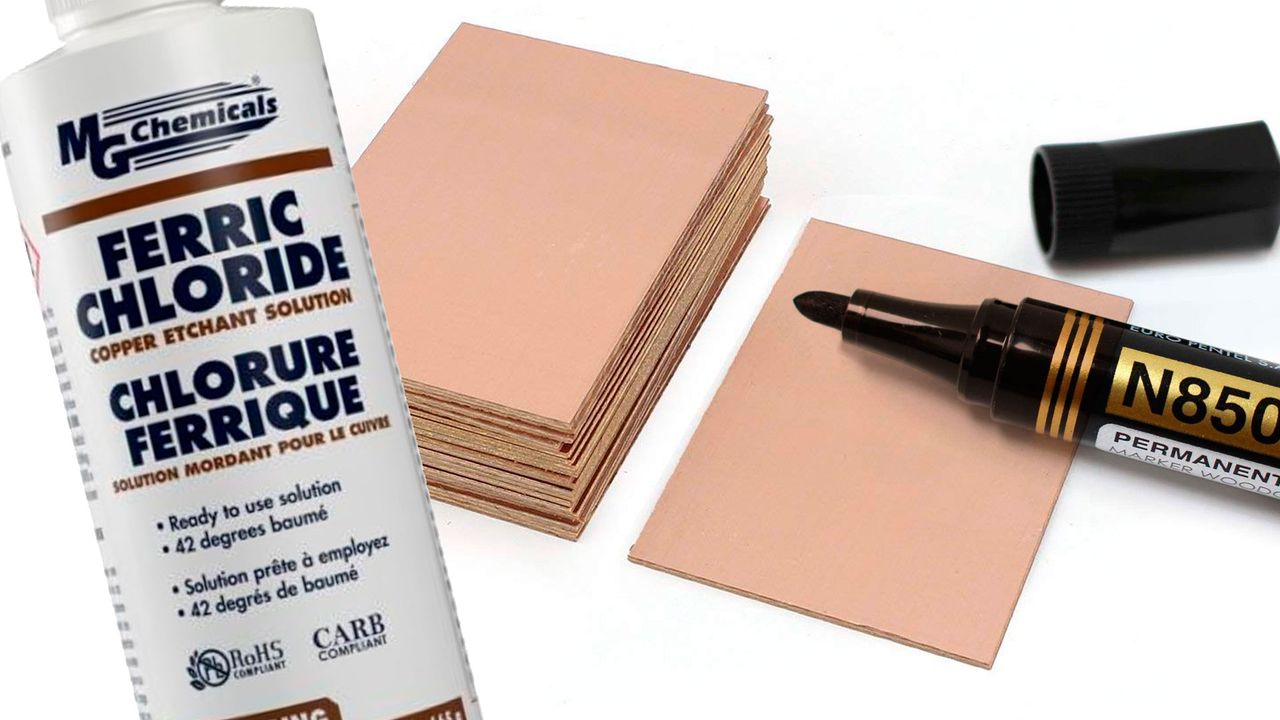
(Image credit: Amazon product images)
Copy link
X
Share this article
4
Join the conversation
Follow us
Add us as a preferred source on Google
Newsletter
Subscribe to our newsletter
A maker bored with the staid, regimented, and inartistic designs of traditional/modern factory-produced PCBs has perfected their own hand-inking and home-etching process. Elliot Andal of the ALTco channel on YouTube began their video by lamenting how mass-produced PCBs are dominated by straight lines and angles due to the dominance of electronics CAD apps. Andal narrowed down the best photo resist and etching substances and then prepared an artistic-looking PCB that will be used for a fan controller. This 3D-printed filtered fume extractor design is destined to be used in ALTco’s soldering workshop.
Making a real hand-drawn PCB - YouTube
Watch On Andal knew what PCB traces they wanted to draw, and had a few materials ready for testing the process. Key source materials would be a blank copper-clad circuit board, which was cut to scale, a number of paints and markers to test for photoresist properties, and several etching chemical choices.The electronics buff experimented with various combinations of the above materials, as well as different ways to prepare the circuit board surface ahead of drawing out the PCBs. You can check out the various failures and learning process with Andal in the video, but the refined hobbyist technique for making PCBs relied on the following key choices.Latest Videos FromA blank copper-clad circuit board, no particular brand was mentioned, and you can find this stuff in lots of shapes and sizes onlineThe Pentel N850 permanent marker bullet tip for photoresist drawingAnd reliable old Ferric Chloride for etching away unprotected copperSo, in the end, the ‘standard’ ingredient of the blank copper circuit board remained. From the multitude of pens and paints, the Pentel stood out for even coverage and flawless ‘resist’ behavior. Finally, etching agents such as hydrogen peroxide, vinegar, and salt were seen to be unsuccessful alternatives to ferric chloride.With the materials and technique now set, Andal carefully drew their final PCB design, complete with arcs, curves, and the ALTco logo. It etched very cleanly in the proven ferric chloride bath and was subsequently cleaned to gleaming copper in all the right places. With that result, Andal soldered all the necessary ICs and wires. For a finishing touch, they ended up tinning the whole set of traces with solder so it looks even nicer.At the end of the video, you can see the finished filtered soldering fume extractor in action, with its PCB on proud display, not hidden within. The ALTco voiceover humbly says that it works “surprisingly well.”The last homebrew PCBs project we looked at used rustic hexagonal clay substrates and a prehistoric-inspired firing method before traces were painted with silver ink.Stay On the Cutting Edge: Get the Tom's Hardware NewsletterGet Tom's Hardware's best news and in-depth reviews, straight to your inbox.Contact me with news and offers from other Future brandsReceive email from us on behalf of our trusted partners or sponsors
Follow Tom's Hardware on Google News, or add us as a preferred source, to get our latest news, analysis, & reviews in your feeds.
TOPICS
See all comments (4)
Mark TysonNews EditorMark Tyson is a news editor at Tom's Hardware. He enjoys covering the full breadth of PC tech; from business and semiconductor design to products approaching the edge of reason.
4 Comments
Comment from the forums
Would be awesome if someone built a printer type device to allow home users the ability to make their own boards..
Reply
I have been doing this for decades, also many of my friends also do this, whats the big deal?
Reply
darkmode said:Would be awesome if someone built a printer type device to allow home users the ability to make their own boards..Its called "Toner transfer" - all you need is a laser printer and toner transfer paper (or a shiny magazine page in a pinch), and a clothes iron. You can do 15mil track/space easily; I've personally done 5mil track/space on flex with surprisingly good results.
Other methods: Use a resin printer to do UV exposure on presensitised copper laminate. Print onto clear acetate sheet and use that as a mask for UV exposed copper laminate. Use a dedicated PCB laminate CNC router. Use a laser cutter/engraver to ablate resist paint off copper laminate.
I have been doing this for decades, also many of my friends also do this, whats the big deal?Me too. This is hardly newsworthy.
Reply
pjmelect said:I have been doing this for decades, also many of my friends also do this, whats the big deal?Probably just that is based on a general-public assumption that this has been done via machines and software for decades now rather than by human hands. Counterexample any sort of sewing or related, which is expected to be machines at scale but still humans for single items - a quilt, adjustments to a dress or suit, etc. The fact that you do this would be seen as unusual and possibly closer to an artist or a craftsman. Consider it a mark of a craftsman then, that you do this yourself, and be proud of it!
Mindstab Thrull
Reply
View All 4 Comments
📰Originally published at tomshardware.com
Staff Writer