OpenBSD 7.9 arrives, a diamond in the rough proud of every sharp edge
Sixtieth release adds more cores, delayed hibernation, and basic Wi-Fi 6 without losing its ascetic streak
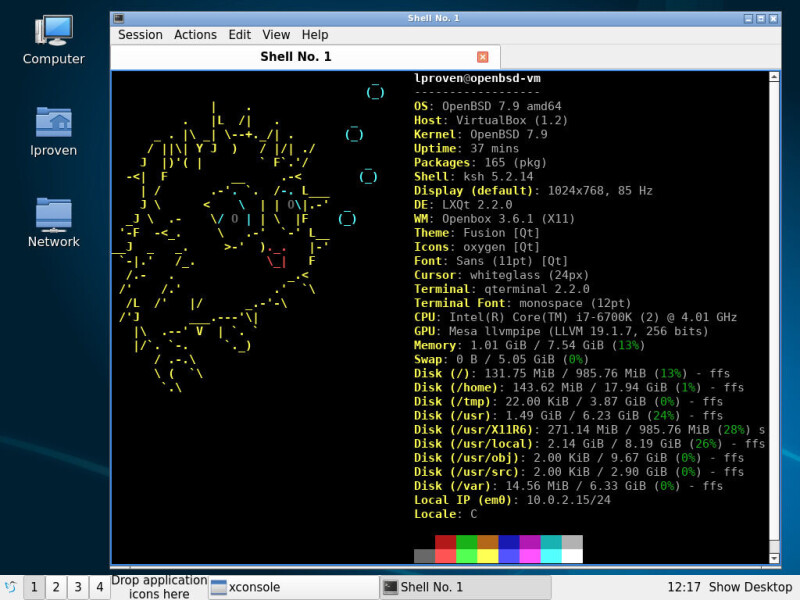
Software OpenBSD 7.9 arrives, a diamond in the rough proud of every sharp edge Sixtieth release adds more cores, delayed hibernation, and basic Wi-Fi 6 without losing its ascetic streak Liam Proven Liam Proven Published mon 25 May 2026 // 08:33 UTC HANDS ON Even after 60 releases, to borrow Carlsberg's slogan, OpenBSD is probably the most secure FOSS Unix-like OS in the world. OpenBSD 7.9 arrived just a couple of days after project lead Theo de Raadt's birthday. Our congratulations to both. The last four months or so have seen the fastest succession of security issues in Linux that we can remember in the project's existence so far, but OpenBSD sails on serenely. Back in March, Anthropic announced that its Claude Mythos LLM had found a successful OpenBSD attack – but it wasn't a hole. A TCP/IP packet with malformed Selective Acknowledgement options could crash the kernel. This was a real problem, and the bug that caused it went back 27 years, but it doesn't let anyone in. The OpenBSD developers had already included a fix for the bug two weeks earlier, so OpenBSD 7.8 users would get it the next time they ran sysupdate , and it is of course fixed in this version. REG AD LXQt on OpenBSD, because you don't have to live in an xterm if you don't want to The new features in version 7.9 are relatively modest. On x86-64 machines – which it terms amd64 – 7.9 now supports a maximum of 255 processor cores, and fixes a bug on machines with over 512 GB of RAM. It can also handle up to 52 partitions per disk. Internally, there can be up to 64, but the limit is now the number of lowercase and uppercase letters of the Roman alphabet, which it uses in labels. REG AD On x86-64 and Arm64, the CPU scheduler now understands heterogeneous CPU cores with different performance levels, and can assign processes to four different performance levels described by the letters S-P-E-L, denoting SMT, performance, efficient, and lethargic. This should improve power management, and ano
📰Originally published at theregister.com
Staff Writer