Scientists Just Turned Silkworm Silk Into a Near-Kevlar Supermaterial
Unlike previous attempts, the latest human-made version of silk keeps everything great about natural silk while ramping up its toughness and versatility.
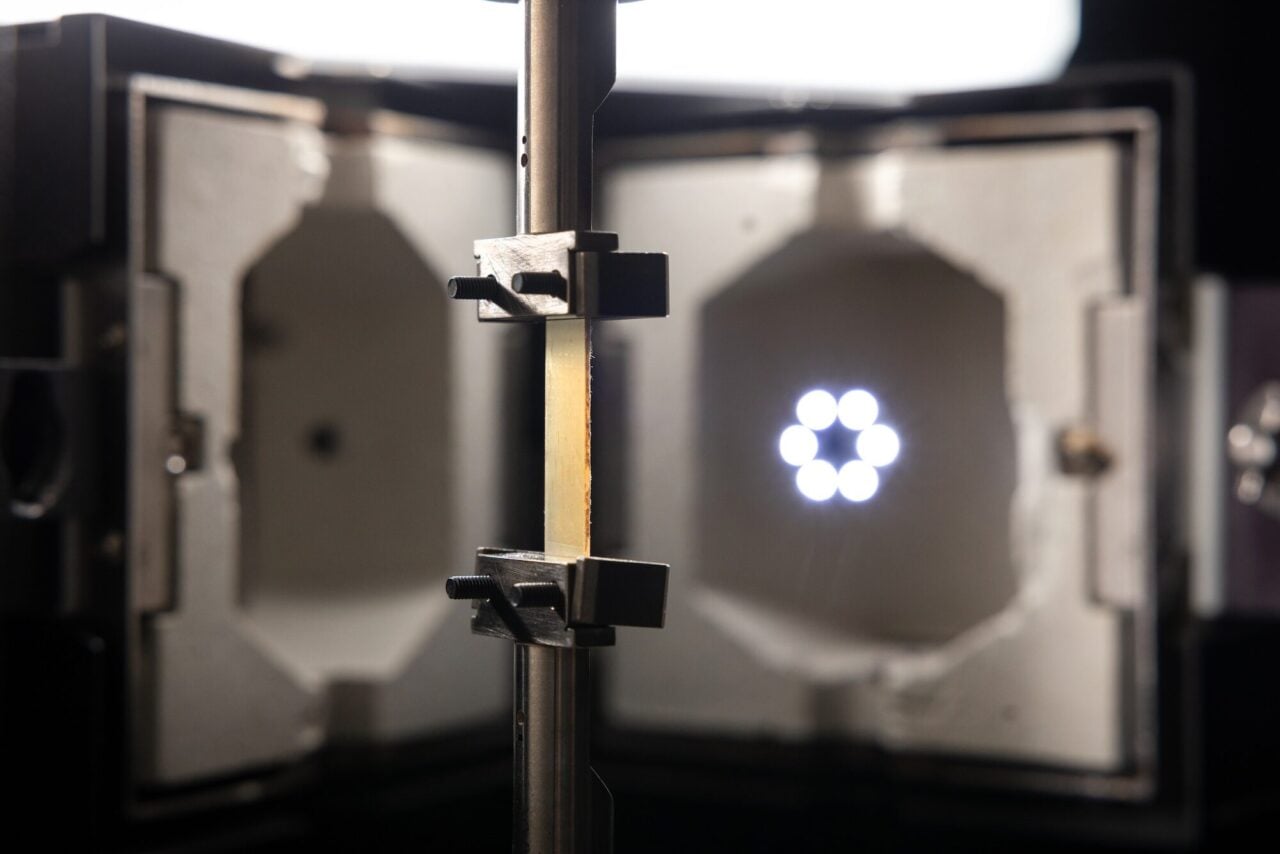
Spider silk is reportedly five times stronger than steel . With some genetic adjustments, silkworm silk can get even tougher . And now, one team says it’s found a way to spin near-Kevlar-level silk fibers—no synthetic strings attached, literally. Remarkably, the new approach preserves the natural structure of the silk fibers and mostly depends on carefully controlled temperatures and pressures to toughen up the silk. According to a recent Nature Sustainability study on the findings, heat and pressure fused silk fibers into a dense, transparent material with tensile toughness greater than bone and nearly as high as Kevlar fibers. Compared to artificial materials, the fiber degrades more easily, making it a viable component of sustainable technologies, the paper noted. What’s more, this “fused silk” is also transparent in the visible range and has optical properties relevant for next-generation wireless and imaging technologies, Chunmei Li , study co-author and a biomedical engineer at Tufts University, told Gizmodo. Fusing silk at increasing levels of temperature and pressure confers different properties of strength, biodegradation, and optical behavior. The leftmost bar here was created at 203 degrees Fahrenheit and the rightmost bar at 473 degrees Fahrenheit, both at 5,100 atmospheres. Credit: Qichen Zhou/Tufts University Following the silk lore Historically, humans began extracting silk from silkworms as early as 8,500 years ago . But in recent years, the unique chemical organization of silk fibers has attracted a “resurgence of interest” in silk for developing high-tech materials in biomedical engineering, energy generation, food preservation, sensors, and more, according to the paper. “The initial question stemmed from a long-standing problem in processing natural biopolymers,” Li said. Natural silk has “impressive mechanical and functional properties,” he added, but processing silk has required a “slow, chemically
📰Originally published at gizmodo.com
Staff Writer