SpaceX admits it can't find enough chips for orbital AI yet, requires 'significantly more than are currently available to us' — firm's risk factors in IPO paperwork also says ambitious TeraFab project may not be successful
SpaceX warns that it may not secure enough AI hardware to achieve its orbital AI ambitions even with supply from TeraFab. Also, Intel and Tesla may leave the TeraFab project.
SpaceX admits it can't find enough chips for orbital AI yet, requires 'significantly more than are currently available to us' — firm's risk factors in IPO paperwork also says ambitious TeraFab project may not be successful | Tom's Hardware
Skip to main content
Stay On the Cutting Edge: Get the Tom's Hardware Newsletter Get Tom's Hardware's best news and in-depth reviews, straight to your inbox.
Contact me with news and offers from other Future brands
Receive email from us on behalf of our trusted partners or sponsors
By submitting your information you agree to the Terms & Conditions and Privacy Policy and are aged 16 or over.
You are now subscribed Your newsletter sign-up was successful
An account already exists for this email address, please log in.
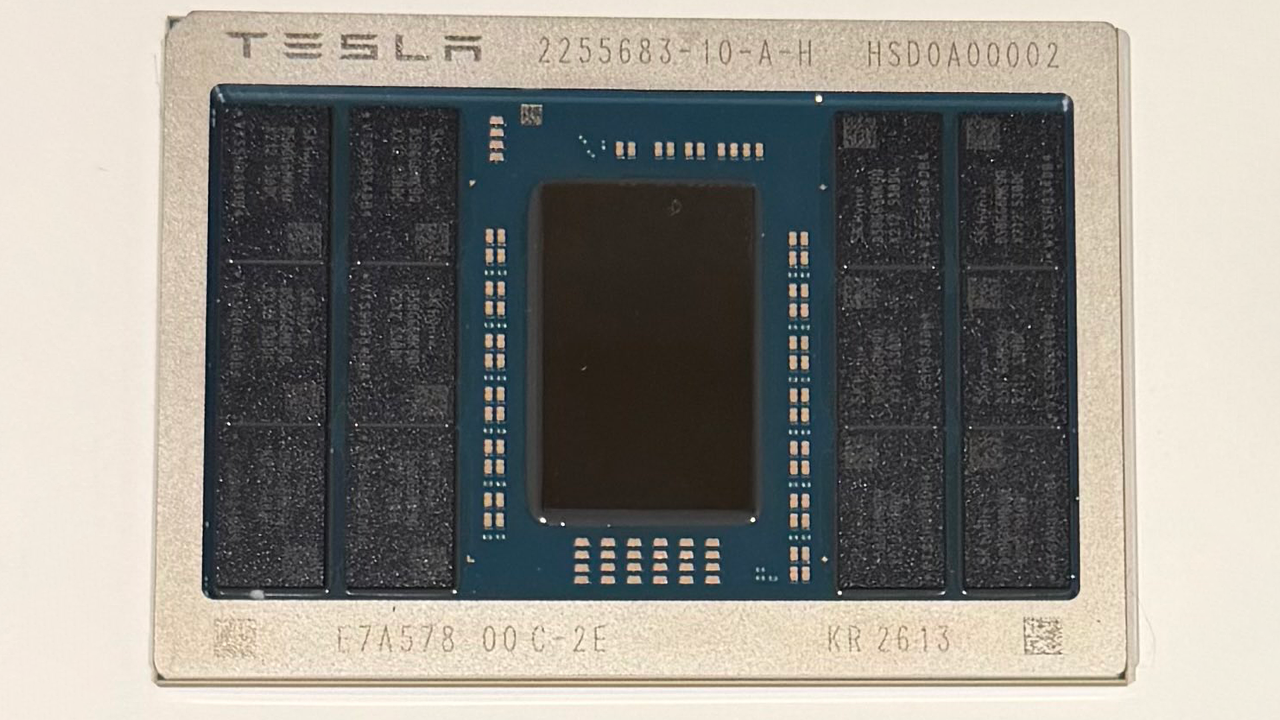
(Image credit: Tesla)
Share
Copy link
X
Share this article
Join the conversation
Follow us
Add us as a preferred source on Google
Newsletter
Subscribe to our newsletter
Ahead of its hotly anticipated IPO, Elon Musk's SpaceX has admitted in its Form S-1 document that to fully scale its orbital AI ambitions, it needs more AI hardware than it can currently obtain. Furthermore, while the company says that the ambitious Terafab project may address chip constraints, it also noted that the project may not be successful and that current partners Tesla and Intel have no obligation to stick with the project long-term.As with all IPOs, the SEC requires that the company list all risk factors, both large and small, and these often even include 'Acts of God,' such as potential weather events, so the comments must be taken with the proper perspective. However, they do illustrate some of the roadblocks the company could perceive as genuine challenges to its business model.Go deeper with TH Premium: CPU
(Image credit: Tom's Hardware)CPU scaling with DLSSRyzen to the top: How AMD innovated in the gaming CPU marketHow ARM is working its way into PCsAMD CES 2026 gaming trends press Q&A roundtable transcript"Our ability to achieve orbital AI at scale depends on our ability to access a sufficient number of AI chips, significantly more than are currently available to us," the filing SpaceX reads. "Manufacturing and supply of servers and network equipment for our technical infrastructure, particularly for GPUs and other specialized components, is limited to a small number of qualified suppliers. We do not have any long-term or other material contractual arrangements with our direct chip suppliers; instead procuring all of our GPUs on a purchase-order basis."Latest Videos FromThe current business arrangements with GPU suppliers — such as AMD, Nvidia, or manufacturing partners TSMC and Samsung Foundry — leave SpaceX and its xAI division exposed to 'fab capacity shortages, raw material constraints, geopolitical disruptions, and natural disasters affecting semiconductor manufacturing regions.'TSMC, the world's largest foundry and the world's largest maker of advanced logic chips, can barely meet demand for AI processors, and industry insiders warn that they are supply-constrained. For example, Nvidia increased its total supply, inclusive of inventory, purchase commitments, and prepaids, to $145 billion to ensure the supply of chips and other components. Other companies tend to do the same.To at least partly reduce its risks, Tesla, SpaceX, and xAI intend to build TeraFab, a dedicated semiconductor production facility that will exclusively produce chips for these three companies. For now, all we know about TeraFab is that it plans to operate a fab that will be located in a SpaceX campus in Texas and use Intel's 14A process technology to make chips. Elon Musk intends to invest tens of billions in TeraFab, but this does not guarantee that it will be a success, the S-1 warns."While we expect to construct Terafab to address such supply constraints, Terafab may not be successful, in which case we may not have other sources of sufficient AI chips to meet our orbital AI compute demands," another claim by SpaceX reads. "While Terafab is intended to expand our internal chip manufacturing capabilities and alleviate potential future AI chip shortages at SpaceX, particularly as we pursue orbital AI at scale, we expect to continue sourcing a significant portion of our compute hardware from third-party suppliers, and there can be no assurance that we will be able to achieve our objectives with respect to Terafab within the expected timeframes, or at all."Stay On the Cutting Edge: Get the Tom's Hardware NewsletterGet Tom's Hardware's best news and in-depth reviews, straight to your inbox.Contact me with news and offers from other Future brandsReceive email from us on behalf of our trusted partners or sponsorsInterestingly, Intel and Tesla may leave the project, leaving TeraFab without a significant customer and process technology developer, which might ruin the whole project. "While we have a framework agreement with Tesla, neither Tesla nor Intel are obligated to remain a part of the project, and we may not enter into any such definitive agreements," the Form S-1 reads.
Follow Tom's Hardware on Google News, or add us as a preferred source, to get our latest news, analysis, & reviews in your feeds.
TOPICS
Anton ShilovContributing WriterAnton Shilov is a contributing writer at Tom’s Hardware. Over the past couple of decades, he has covered everything from CPUs and GPUs to supercomputers and from modern process technologies and latest fab tools to high-tech industry trends.
📰Originally published at tomshardware.com
Staff Writer
Related Articles
Lenovo says it's digging into allegations that its China-only G10 handheld is being used for piracy — third parties may be including illicit games to inflate prices in the gray market
May 27, 2026·1 min read
Samsung’s top Android rival might copy S26 Ultra’s Privacy Display, but will it be better?
May 27, 2026·1 min read
Google is giving you more control over search history and personalization
May 27, 2026·1 min read